
|
Set up your delivery with Eric or Teresa in the SKI products building. Contact: 317-757-5000 or [email protected] 
1 Comment
 In the United States, the May Day holiday was first celebrated in 1886, as part of the struggle for the eight-hour workday. On May 1st of that year, hundreds of thousands of workers across the country went on strike, demanding better working conditions and shorter working hours.
Since 1875, The Kentucky Derby horse race has been held on the first Saturday in May, making it one of the oldest in the world. While pots of terra-cotta and stone are more attractive, they tend to require more frequent watering than nonporous plastic and fiberglass containers. When shopping for plant material if the tag says partial or medium shade it means an area that is shaded for six hours per day. The area might get direct sun from 3:00 p.m. on, or direct sun only in the morning. The Empire State Building opened its doors on May 1,1931. At this time, it held the record for being the tallest building in the world. Cutting roses and trimming bushes can be a prickly job. To make the task pain free and fast, grip thorny stems with barbeque tongs or clothespins. In Holland, the tulip capital of the world, tulip bulbs are dug up after they bloom, held in cold storage and replanted each fall. You know you’re from Indiana if you know what the phrase “Knee-high by the Fourth of July” means. Is it a hurricane or a typhoon? They’re actually the same type of event. What we call a hurricane in the United States is a typhoon if it forms in the northwestern Pacific. Meteorologists also use the general term tropical cyclone. Panophobia—The fear of everything or tear that terrible things will happen. 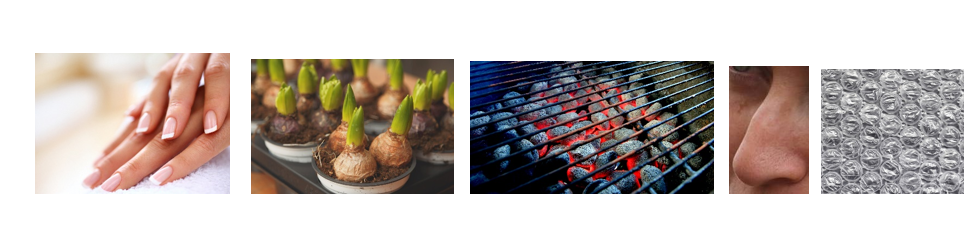 The Titanic, which was thought to be unsinkable, encountered an iceberg on April 15, 1912, and sank two hours and forty minutes later. Only roughly 700 of the 2,224 passengers were rescued since there weren’t enough lifeboats to save everyone.
Heading out to do some gardening? Scrape your fingernails along a bar of soap to create a barrier that keeps dirt from getting deep under your nails. Once you’re done working, grab a nail brush and brush out the barrier as you wash your hands. American President Abraham Lincoln was assassinated by John Wilkes Booth in a crowded theater in Washington, DC, on April 14, 1865. The following day, April 14, Lincoln passed away. Allow the foliage of spring-flowering bulbs to remain in place after blooms fade. Leaves manufacture the food reserves, which are then stored in the bulb for a repeat showing next year. Plant a tree in celebration of Arbor Day, April 24. You should plant bare-root stock before new top growth begins. You can plant balled and burlapped and containerized stock later in spring. Time to prepare your grill for summer cookouts. Try cleaning your grill without chemicals by using half an onion. Onions have natural antibacterial properties and help deep clean the grates. First, get the grill nice and hot to burn off any remaining food. Next, cut an onion in half and pierce it with a long grill fork and scrub. Happy grilling! Plant hardy perennials, such as daylilies and delphiniums. Your nose and ears continue growing throughout your entire life. In the 1800s, ketchup was believed to have healing properties and was used to treat ailments such as indigestion and a bad tummy. The bubble wrap used to wrap fragile objects and that is fun to pop, was initially supposed to be 3D wallpaper.  The month of March symbolically represents new growth, fertility, and procreation in humans, plants and animals.
National Pi Day on March 14th recognizes the mathematical constant π. Also known as pi, the first three and most recognized digits are 3.14. The day is celebrated by pi enthusiasts and pie lovers alike! March 10 is the start of Daylight Saving Time, which begins at 2:00 A.M. that day. Don’t forget to “spring forward” and set the clocks one hour ahead. The extra hour of daylight is intended to assist both our general mental health as well as agricultural employees, like farmers. Starting seeds indoors allows you to gain a few precious weeks of growing time, which can really make a difference. It’s actually necessary for a number of plants--warm-season vegetables—such as tomatoes, peppers, and eggplant. Sprinkle salt on carpets to dry out muddy footprints before vacuuming. The first telephone was patented on March 7th, 1876 by Alexander Graham Bell. Many cultures associate St. Patrick's Day, March 17, 2024, with the color green. Green is the color of chlorophyll, the magical pigment that helps plants make their own food through photosynthesis. Although green is the color of envy and jealousy in some cultures, it's also the color of luck and prosperity in others! Around March 20 or 21, the Vernal Equinox takes place. The duration of the day and night are equal at this time since the sun is directly overhead the equator. Raspberries are part of the rose family as are cherries, apricots, plums, pears, apples, quinces, peaches, strawberries, and blackberries. Unlike roses though, these types of fruits typically have flowers with five equal petals arranged around a central core. Spring cleaning? The roots of cleaning can be traced back all the way to 2800 BC. Archeologists discovered that ancient Babylonians started making soap around this time, as they excavated soap-like materials and various cylinders. These cylinders contained inscriptions saying “fat boiled with ash. Cleaning was also prevalent in other ancient civilizations, such as the Egyptians. For instance, a medical document dating back to 1500 BC proves these people used vegetable and animal oil to form soap-like substances. They also relied on alkaline soap for washing. Plant a spring garden for beautiful birds and butterflies. Where in the world is no barking allowed and many more fun facts!!!! Just click here conta.cc/49cLOL9
 The month of February is named after an early Roman cleansing ceremony-- spring cleaning festival. The word comes from the Latin term “februum,” which signifies purification.
Most houseplants require less water in winter because growth is slowed or stopped. Check soil for dryness before watering. Bulbs decide that winter has come and gone by keeping track of the total time when the temperature around them is below 45 degrees but above freezing. After a certain amount of time—up to 12 weeks for tulips and 6 for crocus—the bulbs are ready to wake up, grow, and bloom. Garlic is called “the stinking rose” and is a member of the lily family related to leeks, chives, onions, and shallots. It is rich in manganese, Vitamin B, Vitamin C and selenium. Garlic’s antibiotic and antifungal properties ward off a number of pests and diseases. The four leaves on a 4-leaf clover represent the arms of the cross. Long before Christianity the cross was a powerful symbol. Patented in the United States in 1863—before the telephone—the fax machine, called the pantelegraph, was sending faxes from 1865 to 1870 in France. Use flat paint to hide imperfections in the walls. The higher gloss, the more the problem will show. While trees and shrubs are still dormant, finish any needed pruning. Don’t trim spring-flowering shrubs such as lilac, magnolia and forsythia until after they finish blooming. Warm feet, better sleep. Putting on socks before crawling into bed improves all over circulation by opening up the blood vessels in the feet. When the blood vessels dilate and open up in the feet, they release heat that redistributes throughout the body, allowing for a more rapid decrease of core body temperature. In 1908, Nick Freienstein, son of German immigrants, opened a street corner restaurant in Huntington, Indiana. He had grown up eating Weiner Schnitzels. He also ran a hamburger cart. Combining these two together he invented the pork tenderloin sandwich.  Ellis Island in New York City opened on January 1, 1892.
“Happy New Year” in Spain and parts of Latin America means eating 12 grapes, one at each stroke of the clock, to symbolize success for each month of the coming year. Human teeth are the only part of the body that can't heal themselves. There are more bacterial cells in your body than human cells. The average human is around 56 per cent bacteria. Most ginger cats are male because the ginger gene is found on the X chromosome, meaning female cats would require two copies of the gene to become ginger while males only need one. Cut back ornamental grasses. Clip back the old foliage before new growth begins cutting back to within a few inches of the ground. Plant amaryllis bulbs in pots now for spectacular indoor flowers in early spring. Suddenly struck with a painful leg cramp in the middle of the night or while exercising? Try drinking 2-3 oz of pickle juice. It can help alleviate muscle cramps and Charley horses. If you seal an envelope and then realize you forgot to include something inside, place your sealed envelope in the freezer for an hour or two. It should unseal easily. Magnesium regulates muscle and nerve function, blood sugar levels and blood pressure. It’s also necessary for making protein, bone, and DNA. Every cell in our body contains magnesium—and needs it to function.  In the mid-17th century, the Puritan-led English Parliament banned Christmas celebrations in favor of a day of fasting. Furthermore, the first state to declare Christmas a legal holiday was Alabama in 1836. The last was Oklahoma in 1890.
If you want to remove odors from your shoes, try putting a few dry teabags in each shoe to absorb the smell. The Christmas classic, It's a Wonderful Life, initially bombed at the box office. It wasn't until 1974, when its copyright expired and television networks could air it for free, that it cemented its place as one of the most beloved Christmas movies of all time. In America, the tradition of leaving cookies and milk for Santa Claus on Christmas Eve took root during the Great Depression, when parents encouraged children to keep their charitable spirit alive in the face of financial hardship. Avoid walking on your lawn when it’s blanketed by heavy frost or snow, as this damages the grass. Store natural peanut butter upside down so it won't separate as much. Make a pile of old logs in an undisturbed corner of the garden to provide shelter for toads and other wildlife. Only female hollies bear the red berries. There must be a male tree nearby for pollination and fruit production to occur. It can take 14 days or more to fully recover from a cold. When infection occurs, a cold goes through four characteristic stages: incubation, early symptoms, peak symptoms, and recovery. As there is no cure for the common cold, treatment is focused on rest, fluids, and symptom relief. An alternative way to keep your wine cool is to freeze grapes and use them as ice cubes. Plus, you can enjoy eating them afterwards! Click here https://3conta.cc/3rueEXj to find out about Salts of the Earth, Thrillers, Fillers and Spillers and many other scary things!!
 There really are so-called vampire bats. They live in Central and South America and feed on the blood of cattle, horses, and birds.
Fall is also known as autumn. The season once had a third name as well. In the 12th and 13th century fall was called "haerfest," which was the act of taking in crops. Eventually, it was known as "harvest" because the full moon closest to the autumn equinox is called the harvest moon. Nearly two-thirds of people with migraine headaches have attacks when the barometric pressure dropped, possibly due to an effect on pressure-sensitive receptors in the brain. Both wind and sunlight have been shown to trigger migraines as well. Purple and red fall leaves get their color through "anthocyanins" pigment, which is only produced in the fall when sugars are trapped in the leaves. Lots of dry weather and sunlight will lead to more sugars in the leaves, meaning the leaves will be brighter red. Freezing, meanwhile, stops the process of making red pigments. Bufonophobia—fear of frogs. Get faster relief from post-workout soreness (within 48 hours) by consuming 1.8 grams of omega-3 fats every day (the amount is about 10 walnut halves). Their anti-inflammatory effects help fight aches. Friday, October 13 may send chills down your spine. If you’re superstitious here a few actions to avoid on this day: Avoid black cats. Don’t spill salt. Don’t start a new journey, a job, a marriage or a business project. Don’t give birth. It is unlucky to cut fingernails and hair on Friday the 13th. Don’t open an umbrella indoors. Change your bed on this day to avoid bad dreams. Those who pass a funeral procession on this day, will die the next day. Ships should not be allowed to set sail because it will sink in the sea. Fall is an excellent time to plant trees because that’s when they’re programmed to do most of their root growing. Trees keep producing roots as long as the ground temperature is above 40 degrees. Do not take the supplement, Echinacea, before surgery. Although it helps prevent throat infections it may reduce the immune system response and could interfere with healing. |
AuthorsCurrent and former staff members have contributed to our newsletter over the years. Now the articles are available to view here on our blog Categories
All
|
 RSS Feed