Ski Landscape
  • Welcome
  • About Us
  • Contact Us
  • Jobs & Application
  • Ski Landscape Products
    • Ski Landscape Mulch
    • Brush Dumping
    • Stone
    • Soil
  • Commercial Services
  • Ski Landscape Blog
  • Ski Landscape Photo Gallery
  • The Mulch Trailer
  • The Tree Pincher
  • Landscape Industry News
  • For Sale
  • Sitemap
  • Newsletter archive
  • Welcome
  • About Us
  • Contact Us
  • Jobs & Application
  • Ski Landscape Products
    • Ski Landscape Mulch
    • Brush Dumping
    • Stone
    • Soil
  • Commercial Services
  • Ski Landscape Blog
  • Ski Landscape Photo Gallery
  • The Mulch Trailer
  • The Tree Pincher
  • Landscape Industry News
  • For Sale
  • Sitemap
  • Newsletter archive
Search

Colored Eggs - a Sign of Spring Over Many Centuries

3/26/2012

113 Comments

 
In ancient times, Egyptians dyed eggs as a rite of spring. People in Persia gave each other gift eggs to celebrate spring. The custom of dying eggs was probably brought to Europe by the Crusaders and was expanded in Germany to involve rabbits and hidden surprises. Until commercial dyes developed in the 19th century, people colored eggs with whatever roots, berries, leaves and flowers were available. 

Some natural egg dyes include: 
  • Blackberry shoots - light gray
  • Blueberries, frozen - light, grayish blue
  • Red Cabbage - blue
  • Red Onion Skins - light blue to purplish 
  • Beets - raspberry 
  • Sassafras Roots, dried - orange
  • Paprika - light reddish brown
  • Coffee, instant - dark brown
  • Turmeric - yellow
113 Comments

Ski Notes

3/19/2012

0 Comments

 
Picture
Circa 1995
  • Don't create a flower bed around an unsightly feature such as a fire hydrant. It only draws more attention to that feature. 
  • Store watering can upside down after use to help prevent rust. 
  • Avoid, if possible, installed and maintaining a bed where you must haul in water. A hot, dry summer can defeat you. 
  • Use trees and shrubs that have more than one feature or seasonal interest. 
  • Let foliage from spring bulbs stay in place after the flower dies. Leaves make food reserves for next year's blossoms. 
  • Plants watered too often will develop shallow roots and will lose their tolerance for drought. 
  • Don't leave sprinklers running so long that water forms puddles. Beneficial microorganisms drown in saturated soil. Also, plants gasp for oxygen and stop absorbing nutrients. Plants need about 1" per week during growing season. 
  • Prune trees and shrubs to avoid interfering with homes, fences, etc..., improve wind resistance, gain access to fruit and to create good branching structure.  
0 Comments

The Sweet Smells of Spring Planting

3/16/2012

0 Comments

 
Picture
Circa 1995


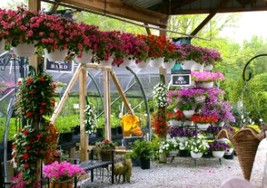
Garden centers are bursting with colorful flowers, thriving shrubs and blooming trees.  These centers strategically place their best stock in prime viewing position for anxious spring gardeners to drool over and, eventually, purchase though they may not really need those specific plants. Before you make a landscape investment, check out the reputation of the garden center and consider your specific plant needs. 

Where to buy plant material
A good green house should be clean - free of insect-and-disease harboring weeds and debris. Look for a display garden that shows how mature plants will appear. Always try to buy from a grower rather than a plant merchandiser. 

A good nursery will have plenty of signs and tags on each plant that includes the genus, species, and cultivar names. Tags also should state color, height, blooming season, hardiness information, and the soil, light and moisture requirements. 

Employees should be able to answer your questions such as where was the plant grown? Ask about guarantees. Many garden centers will either replace dead plants or offer credit toward a new purchase. 

Selecting the right plant
Look for fat, stocky plants with healthy green leaves. Avoid plants with tall spindly stem and widely spaced leaves. Try to buy annuals before they bloom for a more spectacular show. 

All plants should be insect-free. Check the undersides of leaves for pests, and damage such as speckling from spider mites or bite-shaped holes on leaf margins form weevils and other pests. 

Discolored leaves indicate earlier watering problems, or plants with brown and dying centers. Plants should have well-developed root balls that hold their shape when slipped out of the pots. Short, white, "hairy" roots should just be visibly emerging from the soil. Disregard plants with dark or mushy roots or those that smell of ammonia.

By selecting a reputable garden center and the healthiest plants, a spring garden can be a very rewarding activity. 

0 Comments

Ski Notes

3/14/2012

0 Comments

 
Picture
Circa 1994

- Ann Wolski
  • Acorns, pokeweed berries, yew berries and buckeyes are all toxic if ingested by curious children. Vomiting, abdominal pain and sometimes liver and kidney damage can occur. 
  • Consider hardy annuals such as carnations, dianthus, dusty miller, pansies and snapdragons instead of mums to provide good bloom well into October
  • Prepare trees, shrubs and perennials for winter by making sure they have enough water. Moisture helps plants withstand freeze damage. 
  • Early fall is a good time to apply broadleaf weed killer. 
  • Water indoor plants less and stop fertilizing as their growth slows during fall months 
  • Migrating songbirds can climb heights of 5,000 to 20,000 ft. and travel at 15 to 30 mph, covering 90 to 150 miles per night. 
  • Sugar Maples have the most dramatic fall color and are found throughout Indiana. 
  • Save plants such as coleus, wax begonias, impatiens or fuschia for indoor growing over winter. Dig the plants and cut them back about half way. Root them in moist vermiculite, soil mix or perlite. 
  • Fall aeration of the soil is the best way to loosen it and provide grass roots with more nutrients, air and moisture. 
  • Evergreens hung on a door once was an invitation to woodland spirits to enter the home to bring health and prosperity to the household. 
0 Comments

They're "dandy" but deadly

3/13/2012

0 Comments

 
Picture
Circa 1994
- Ann Wolski

They pop up when you least expect it. They can overrun your yard with a sea of yellow and though pretty to look at, they can destroy all other living things. The origin of the dandelion is not known but probably came for Central Asia. It's name is a mispronunciation of the French "dent de lion" or "lion's teeth."

Dandelions have been the source of many old legends and beliefs. It is said that if the seeds are blown away by the wind in early morning, there will be good weather. If the seeds leave the stalk without having been blown by the wind, it will rain. If you can blow away all the seeds in three puffs your mother does not want you home. However, if any seeds are left, hurry home fast! After blowing hard count the seeds that remain to find out how many children you will have.

The English used dandelion roots as a spring tonic and was said to purify the blood, benefit the liver and help with rheumatism. The Irish used the dandelion as a tonic and cure for heart disease. The juice when rubbed on warts, supposedly, caused then to disappear. 

Every part of a dandelion - leaves, stem, flowers and roots - are edible. Dandelion greens are an important source of vitamin A. Sauteed dandelion buds can be used in omelets; the petals in sandwiches; the stems and blossoms for making wine. By roasting the roots, dandelions become a coffee substitute and sometimes mixed with coffee. The roots contain a substance that is used as a laxative. The roots of a species of Russian dandelion produces latex from which rubber is made. 

0 Comments

Ski Notes

3/12/2012

0 Comments

 
Picture
Circa 1994
- Ann Wolski

  • Pomologist - a person who cultivates fruit professionally.
  • Bees are unable to fly in temperatures below 54 degrees. On cool evenings, its a long walk back to the hive. 
  • Start seeds of broccoli, cabbage and brussels sprouts to transplant later for a fall harvest. 
  • For long-lasting blooms on garden-cut flowers, place cut stems in warm water and store overnight in a cool location. 
  • Trees with turf over their roots are more subject to drought stress than trees with mulch over their roots.  
  • To attract attention to your home, plant flowers that match the new shade of paint on your front door or shutters.
  • The first evidence of gardens is found on Egyptian tomb paintings around 2000 B.C.
  • Water in early morning or evening to minimize evaporation. You can also water late at night when water pressure is usually higher. 
  • Basil's original home is Africa.
  • Grass clippings are a natural, nitrogen-rich, slow release fertilizer for your lawn. 
0 Comments
Forward>>

    Authors

    Current and former staff members have contributed to our newsletter over the years. Now the articles are available to view here on our blog

    Archives

    December 2025
    October 2025
    September 2025
    August 2025
    July 2025
    June 2025
    May 2025
    April 2025
    March 2025
    January 2025
    December 2024
    November 2024
    October 2024
    August 2024
    July 2024
    May 2024
    April 2024
    March 2024
    February 2024
    January 2024
    November 2023
    October 2023
    September 2023
    August 2023
    July 2023
    June 2023
    May 2023
    April 2023
    March 2023
    February 2023
    January 2023
    December 2022
    November 2022
    October 2022
    September 2022
    August 2022
    July 2022
    June 2022
    May 2022
    March 2022
    January 2022
    December 2021
    November 2021
    October 2021
    September 2021
    August 2021
    July 2021
    June 2021
    May 2021
    April 2021
    March 2021
    February 2021
    January 2021
    December 2020
    November 2020
    October 2020
    September 2020
    July 2020
    June 2020
    May 2020
    April 2020
    March 2020
    February 2020
    January 2020
    November 2019
    October 2019
    September 2019
    August 2019
    July 2019
    June 2019
    May 2019
    April 2019
    March 2019
    February 2019
    January 2019
    December 2018
    November 2018
    October 2018
    September 2018
    August 2018
    July 2018
    June 2018
    May 2018
    April 2018
    March 2018
    February 2018
    January 2018
    December 2017
    November 2017
    October 2017
    September 2017
    August 2017
    July 2017
    June 2017
    May 2017
    March 2017
    February 2017
    January 2017
    December 2016
    November 2016
    October 2016
    September 2016
    August 2016
    July 2016
    June 2016
    May 2016
    April 2016
    March 2016
    February 2016
    January 2016
    December 2015
    November 2015
    October 2015
    September 2015
    August 2015
    July 2015
    June 2015
    December 2012
    October 2012
    September 2012
    August 2012
    July 2012
    June 2012
    May 2012
    April 2012
    March 2012

    RSS Feed

    Categories

    All
    1994
    1995
    1996
    1997
    1998
    1999
    2000
    2001
    2002
    2007
    Ann
    Edible Plants
    Evergreens
    Feature Foliage
    From The President
    Gardening Tips
    Garden Pests
    John
    Mark Reynold
    Phil
    Ski Notes
    Trees
    Vicki Tennant

© 2024 Ski Landscape Corporation - Website by Day Design
  • Welcome
  • About Us
  • Contact Us
  • Jobs & Application
  • Ski Landscape Products
    • Ski Landscape Mulch
    • Brush Dumping
    • Stone
    • Soil
  • Commercial Services
  • Ski Landscape Blog
  • Ski Landscape Photo Gallery
  • The Mulch Trailer
  • The Tree Pincher
  • Landscape Industry News
  • For Sale
  • Sitemap
  • Newsletter archive